Part of our INSYDIUM Fused Collection, X-Particles is a fully-featured advanced particle and VFX system for Maxon’s Cinema 4D. Its unique rule system of Questions and Actions enables complete control over particle simulations.

Part of our INSYDIUM Fused Collection, X-Particles is a fully-featured advanced particle and VFX system for Maxon’s Cinema 4D. Its unique rule system of Questions and Actions enables complete control over particle simulations.
Converting mini2sf to MIDI can be a useful process for musicians, producers, game developers, and archivists. While there are challenges and limitations to consider, various tools and software applications are available to facilitate the conversion process. By understanding the mini2sf and MIDI file formats, as well as the conversion process, individuals can unlock new creative possibilities and make their sound fonts more accessible and versatile.
MIDI (Musical Instrument Digital Interface) is a protocol developed in the 1980s for controlling and communicating with musical instruments. MIDI files contain a series of instructions, such as note on/off, pitch bend, and control changes, that are sent to a synthesizer or other MIDI-compatible device to generate music. MIDI files do not contain audio data; instead, they instruct the synthesizer to produce sound. mini2sf to midi
The mini2sf and MIDI file formats are two distinct types of audio files used in different contexts. mini2sf is a file format used for storing sound fonts, which are collections of sounds used in synthesizers, while MIDI (Musical Instrument Digital Interface) is a protocol for controlling and communicating with musical instruments. In this write-up, we will explore the process of converting mini2sf to MIDI, the tools required, and the potential applications of this conversion. Converting mini2sf to MIDI can be a useful
The mini2sf file format is used to store sound fonts, which are collections of audio samples used to generate sound in synthesizers. These sound fonts contain a set of sounds, each with its own characteristics, such as pitch, volume, and timbre. The mini2sf format is commonly used in mobile devices, such as smartphones and tablets, for generating sound in music and games. MIDI (Musical Instrument Digital Interface) is a protocol
Converting mini2sf to MIDI can be a useful process for musicians, producers, game developers, and archivists. While there are challenges and limitations to consider, various tools and software applications are available to facilitate the conversion process. By understanding the mini2sf and MIDI file formats, as well as the conversion process, individuals can unlock new creative possibilities and make their sound fonts more accessible and versatile.
MIDI (Musical Instrument Digital Interface) is a protocol developed in the 1980s for controlling and communicating with musical instruments. MIDI files contain a series of instructions, such as note on/off, pitch bend, and control changes, that are sent to a synthesizer or other MIDI-compatible device to generate music. MIDI files do not contain audio data; instead, they instruct the synthesizer to produce sound.
The mini2sf and MIDI file formats are two distinct types of audio files used in different contexts. mini2sf is a file format used for storing sound fonts, which are collections of sounds used in synthesizers, while MIDI (Musical Instrument Digital Interface) is a protocol for controlling and communicating with musical instruments. In this write-up, we will explore the process of converting mini2sf to MIDI, the tools required, and the potential applications of this conversion.
The mini2sf file format is used to store sound fonts, which are collections of audio samples used to generate sound in synthesizers. These sound fonts contain a set of sounds, each with its own characteristics, such as pitch, volume, and timbre. The mini2sf format is commonly used in mobile devices, such as smartphones and tablets, for generating sound in music and games.
xpScatter enables you to scatter your objects over multiple scene geometry, from splines to parametric objects all at the same time.
The topology tab will enable you to distribute your scatter on landscape slope, height, and curvature to create realistic ecosystems.
Animate your growth by using textures, X-Particles modifiers, and Mograph effectors.
Use multiple display modes for fast viewport performance. You can even restrict the scatter of objects to within the camera field of vision for optimal efficiency.
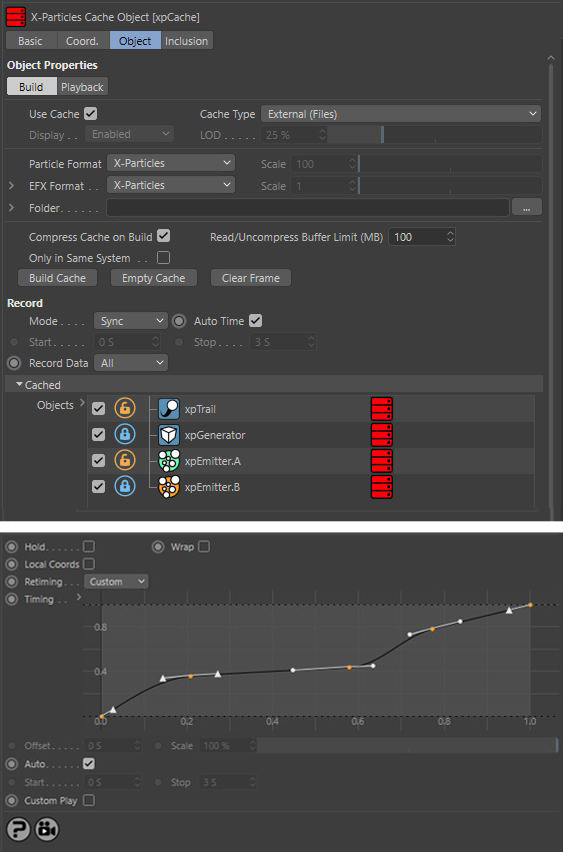
Our time and custom spline retiming option give you fine control over playback. The new cache layers in xpCache enables you to lock and unlock to re-cache objects in your scene.

X-Particles is built seamlessly into Cinema 4D like it is part of the application. It’s compatible with the existing particle modifiers, object deformers, Mograph effectors, Hair module, native Thinking Particles, and works with the dynamics system in R14 and later.
If you know how to use the Mograph module, you already know how to use X-Particles, it's that easy.
X-Particles has the most advanced particle rendering solution on the market. It enables you to render particles, splines, smoke and fire, all within the Cinema 4D renderer. Included are a range of shaders for sprites, particle wet maps and skinning colors. You can even use sound to texture your objects.
Perfectly partnered with INSYDIUM’s Cycles 4D and also compatible with the following: