
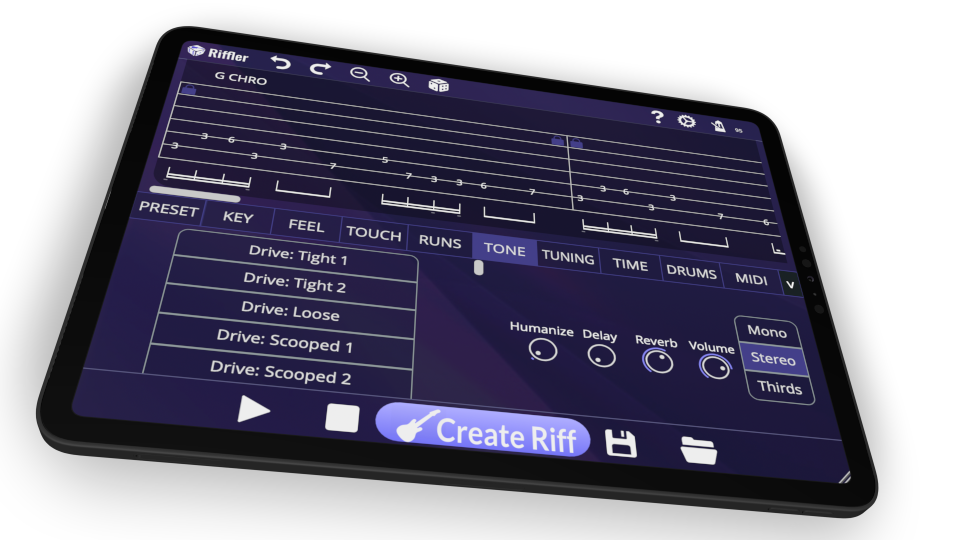
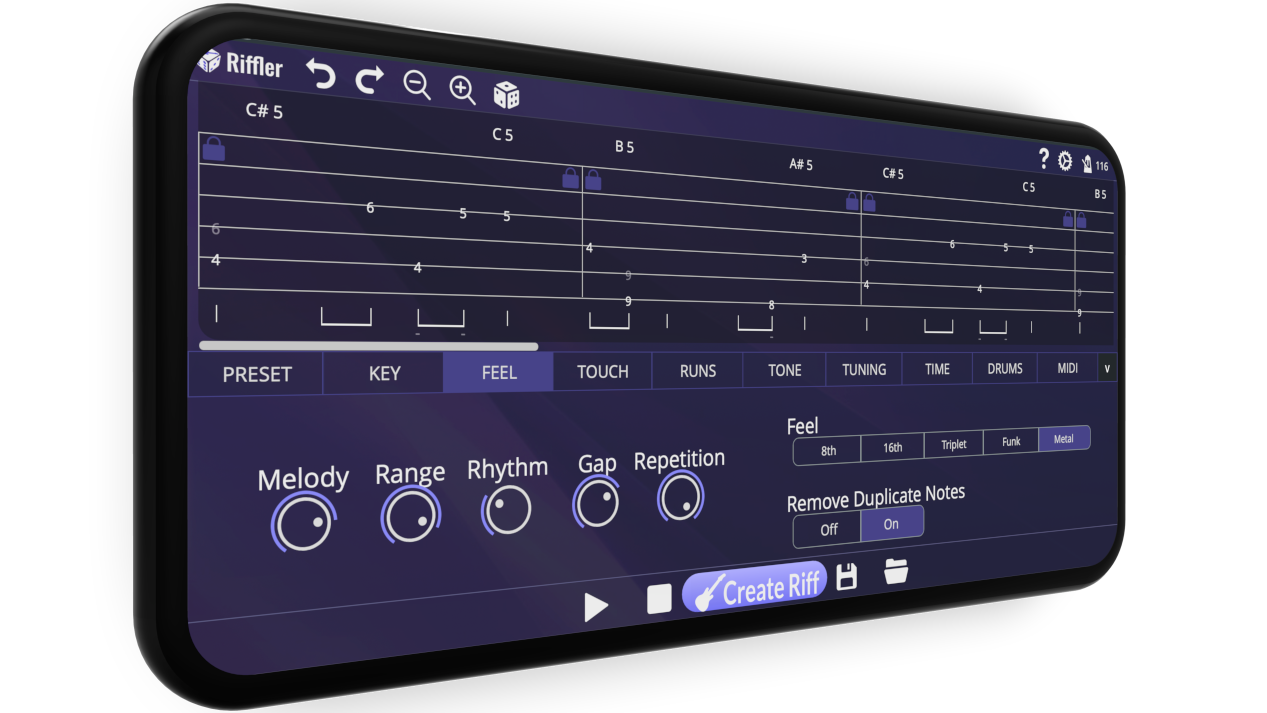
Riffler creates unique, copyright-free guitar riffs instantly. There are a huge range of preset styles, whilst advanced users can explore a wide range of customization options to fine-tune their sound. Riffs can be exported as an audio* or MIDI file and, as Riffler is a VST* and AUv3* plugin, it can be used as a standalone app or inside a host DAW*.
*Not currently on Android.



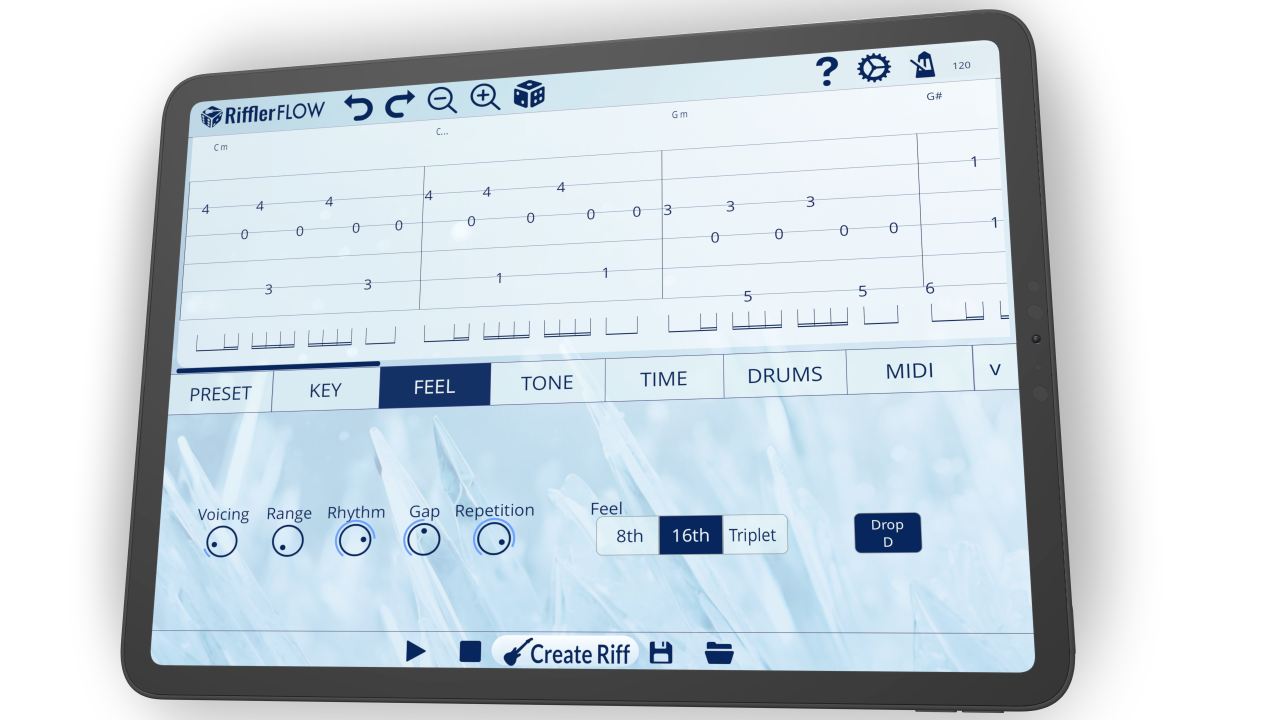
The original Riffler was perfect for instantly making heavy, distorted, scale based riffs. Riffler Flow is a brand new app that instantly generates softer, clean, arpeggio based riffs at the press of a button. Perfect for rock, hip-hop, EDM and more, Riffler Flow includes the same great features as the original Riffler including audio and MIDI export and the ability be used as an AUv3 inside a host DAW.
Sky 32 Vi Driver
If we are to build such futures responsibly, we must resist the temptation to let alphanumeric labels be the final word on persons, systems, or roles. Names matter. Numbers simplify. Designations like "Sky 32 Vi Driver" should be entry points for public scrutiny: Who issued the tag? Whose interests does it serve? Who stands to gain when a lane in the sky is monetized? An honest policy and cultural response will restore narrative to designation, ensure accountability under a clear legal and ethical frame, and keep the literal and metaphorical skies accessible rather than proprietary.
Taken together, the string embodies the central tension of our age: who navigates shared spaces when machines can be licensed, numbered, and optimized more easily than people? In an urban future of vertical transit, "Sky 32 Vi Driver" suggests a layered hierarchy. There are the pilots — human or otherwise — who hold the permits, the corporations that mint identifiers, and the users whose lives depend on punctual, safe passage. The designation is efficient but dehumanizing: a reminder that governance by code can strip narrative and context from the beings it governs. Sky 32 Vi Driver
In short, "Sky 32 Vi Driver" is more than a label; it is a prompt. It asks us to choose whether the aerial future will be organized around human dignity and transparency — or around efficiency and opacity. The answer determines whether those who traverse the sky do so as numbered units in a ledger, or as actors with rights, histories, and claims on the commons.
Sky 32 Vi Driver — a name that could belong to a corporate drone, a licensed pilot, or an algorithm adjudicating movement above the city. "Sky" signals altitude and aspiration: the airspace that was once the commons of birds and weather, now parceled into lanes, classes, and contracts. The number "32" gives it bureaucratic specificity — a tranche among many, a designation in a ledger that reduces uniqueness to a code. "Vi" reads two ways at once: as shorthand for "virtual," hinting at software identity; and as a humanizing initial — perhaps "Vi" the person, or "VI" as shorthand for "visual intelligence" or "vehicular interface." Finally, "Driver" anchors the phrase in motion and control, the human—or surrogate—task of steering through regulated skies. Sky 32 Vi Driver If we are to
Culturally, the term also invites poetical reflection. "Sky" recalls freedom; "32" evokes repetition and scale; "Vi" hints at identity split between organic and silicon; "Driver" implies journey. That ambivalence maps onto contemporary life: we live aspirationally close to the sky via technology, yet our daily navigation is increasingly delegated to inscrutable systems. The phrase compresses both optimism and unease into five syllables.
Regulation and design must contend with these shifts. Airspace governance cannot be a neutral ledger of numeric slots. Ethical frameworks should insist that identifiers like "Sky 32 Vi Driver" carry human-readable provenance: who trained the model, who maintains it, and who is responsible when things go wrong. Labor protections ought to ensure that the humans still at the controls receive not only fair pay but legal recognition beyond a serial number. For autonomous systems, transparency must guarantee that a "Vi" flagged with an incident can be audited and remediated by independent parties. Designations like "Sky 32 Vi Driver" should be
There are moral fissures beneath this economized label. If "Vi" is an algorithm, is accountability legible when a crash report cites a version number rather than a name? If "Vi" is a marginalized worker assigned to fly route 32, does the numbering mask patterns of labor segmentation that canalize risk into certain bodies or neighborhoods? The word "Driver" itself is evocative: it presumes agency, but agency may be illusory. Drivers can be replaced by automated stacks; they can be surveilled by telemetry; they can be compelled to follow corporate policies encoded into firmware.